Multi Chain 101: A Simple Guide for Beginners
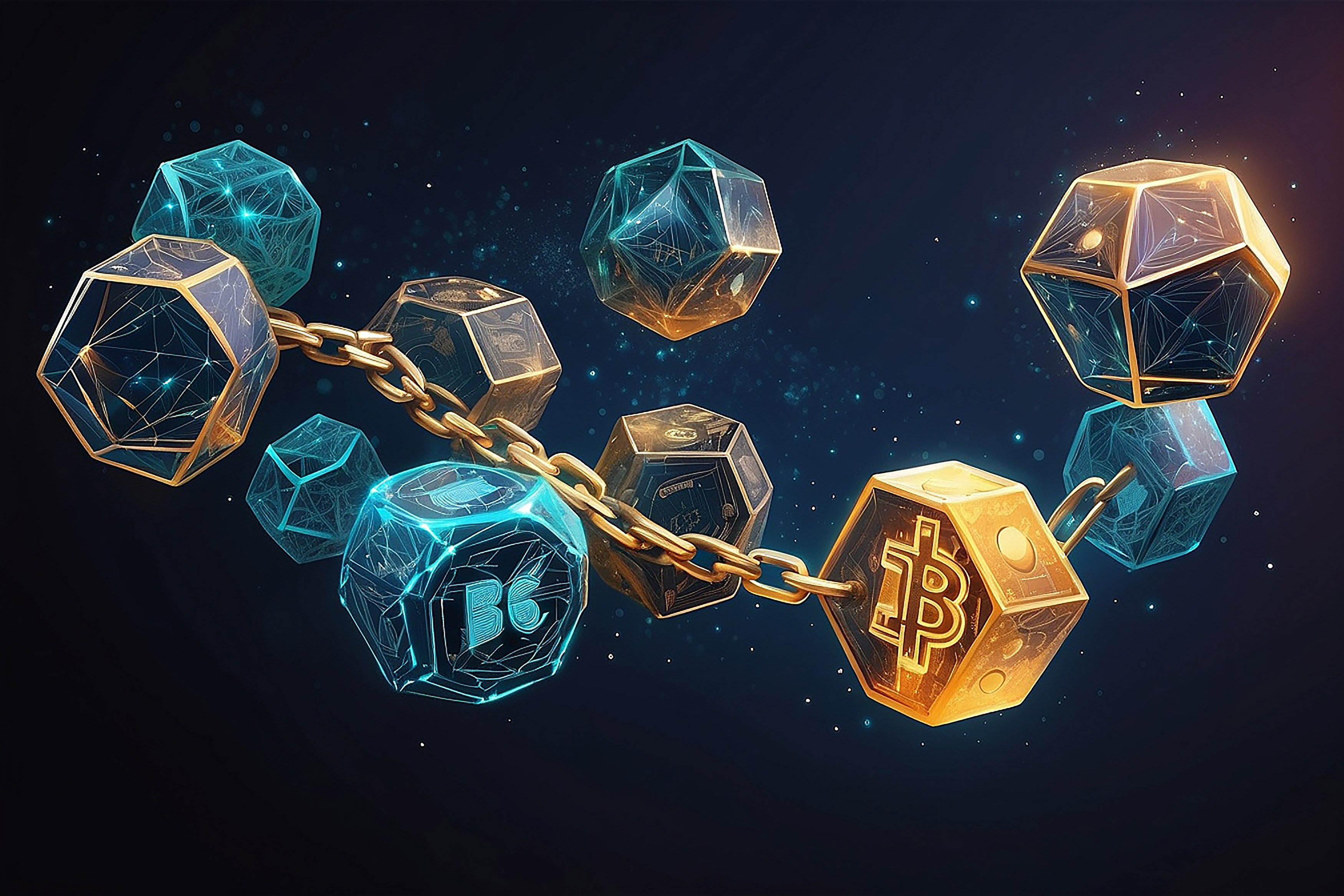
Blockchain-based systems and applications have been developed very fast in the 10 years of their existence. Originally a single-chain ecosystem - mostly bound by Bitcoin, then Ethereum - has evolved into an elaborate, interconnected matrix of networks, each with its own merits. The growth in blockchain types created both opportunity and chaos. Various chains perform well in different areas, but the absence of interoperability leads to isolated apps, fragmented ecosystems, and communication problems.
Enter multi-chain architecture . This is where multi-chain architecture comes in. The multi-chain architecture makes it possible for private blockchains and the public blockchain to communicate and interact with each other, allowing the peer-to-peer exchange of value. If you are a beginner asking yourself, ‘What is blockchain really?’ or a company researching the adoption of decentralized technologies, multi-chain ecosystems offer the way forward for scalability, flexibility, transparency, and stronger security. Moreover, with the increasing risk of quantum computing, Quantum-Proof and Data security-optimized technologies are becoming vital.
This comprehensive guide explains everything you need to know about what multi-chain is, how multi-chain works, why multi-chain matters, and how it fits into the larger progression of digital ecosystems.
What Is a Multi-Chain Ecosystem?
A multi-chain system is a blockchain ecosystem where different types of chains (public, private, permissionless, permissioned, etc.) can coexist and be linked to each other seamlessly. Instead of being trapped in a single blockchain like in traditional single-chain systems, where transactions, assets, and smart contracts pull together, multi-chain ecosystems allow frictionless interoperability across chains.
As a result, users are able to efficiently transfer tokens, share data, and perform cross-chain smart contracts, and developers can utilize the unique capabilities of each chain. In the end, multi-chain environments allow for a better, larger, and more connected blockchain architecture.
Examples include:
- Polkadot - connects specialized chains with relay chains.
- Cosmos is a network of interoperable blockchains connected via the IBC protocol.
- Layer-0 solutions such as Avalanche subnets or Cardano sidechains.
The multi-chain paradigm is not merely about adding more chains; it’s about creating a web of chains. Assets, smart contracts, and data can be freely moved around, allowing developers and users to tap into the best features of each chain.
Why Beginners Should Care
Browsing through Web3 and blockchain for the first time can be made easier with multi-chain systems because:
- They provide more freedom to choose.
- They enhance cross-chain interoperability.
- It eliminates the danger of being stuck within the limitations of a single chain.
- They provide safer, more robust environments, particularly in the era of quantum threats.
How Does Multi-Chain Architecture Work?
Functional interoperability, its core, is based on several technological aspects that enable communication among diverse blockchains.
Bridges
Blockchain bridges are pairs of smart contracts (one on each connected chain) that connect two otherwise separate networks. They enable:
- Asset transfers
- Smart contract interactions
- Cross-chain message passing
But traditional bridges are vulnerable to being compromised as they tend to trust external validators. New paradigms are pursued for trustlessness, quantum-proofness, and cryptographic hardness.
Smart Contract Interoperability
Certain blockchains have native support for specialised smart contract languages that can verify and run messages from other chains. This enables seamless automation, lending, staking, and asset management across networks.
Layer-0 Protocols
Layer-0 blockchains act as the base layer that enables the interaction of various Layer-1 chains:
- Relay chains
- Hubs
- Subnets (e.g., Avalanche)
Security models can be shared by these frameworks, allowing for increased data security , decreased attack vectors, and more efficient transaction processing.
Consensus Compatibility
In order for chains to communicate, their consensus protocols need to be compatible (or at least one). Cross-chain messages are typically protected using sophisticated cryptography in multi-chain ecosystems.
Benefits of Multi-Chain Networks
1. Flexibility Amplified
Multi-chain systems give developers more flexibility than ever. They may run their applications on multiple blockchains to take advantage of different benefits, such as lower fees, higher speed, better privacy, etc. This flexibility means that a project can have the best of performance, user satisfaction, and innovation, and not be held back by one chain.
2. Greater Scalability
Multi-chain structure allows the workload to be shared among multiple blockchain networks, and thus is resistant to any chain overload. This separation improves the performance of the whole system so that the transaction can be processed more quickly and meet the increasing requirements of users. Tapping into multiple chains also allows projects to scale effectively while retaining trustworthiness and speed.
3. Improved Security + Redundancy
Multi-chain deployment increases security and robustness as the activity is spread across different networks. If one chain is down, experiencing technical issues, or is the victim of a cyberattack, the other chains can keep running. When combined with Quantum-Proof protocols, this architecture further enhances the security against emerging cryptographic threats to provide dependable and tamper-resistant operation in applications and data.
4. Convenient User Experience
Multi-chain protocols can also improve user experience by enabling users to access decentralized applications (dApps) on different blockchains with no hassle. Users have the peace of mind that they are on the right network and compatible with the right chain, while automated routing and cross-chain logistics take place under the hood to provide a smooth, efficient, and stress-free experience when accessing services and assets
5. Multi-Asset Mobility
Tokens, NFTs, and even IDs can be moved across ecosystems, enabling:
- Cross-chain DeFi
- Multi-network gaming
- Unified identity solutions
- Omnichain commerce
Why Quantum-Proof Technology Matters in Multi-Chain Systems
Quantum computing is advancing rapidly, and its expected capabilities pose a risk to classical cryptographic systems. Many existing blockchains use classical algorithms like ECDSA and RSA to secure transactions and data. High-level quantum devices might be able to decrypt these processes, risking the authenticity, confidentiality, and safety of digital tokens and communications.
A multi-chain ecosystem should account for Quantum-Proof protocols like the following:
- Post-quantum encryption
- Hash-based signatures
- Lattice-based cryptography
- Zero-knowledge proofs tailored for Quantum resistance
- Multi-chain quantum-safe requirements:
- Secure cross-chain messaging
- Tamper-proof data exchange
- Controlled identity validations (III)
- Future resilience against cryptographic attacks
The blockchain space is maturing, and future-secure is no longer “nice-to-have” – it’s a must-have.
Multi-Chain Use Cases
Multi-chain technology enables various types of applications to be supported:
- Finance & DeFi
- Stablecoin transfers across chains
- Cross-chain lending and staking
- Consolidated asset dashboards
Supply Chain Tracking
Companies can take advantage of multichain infrastructure by running private blockchains to handle sensitive internal business processes and utilizing public blockchains to issue verifiable proofs of the authenticity, transparency, and accountability of those processes and the data they produce, thus achieving both operational privacy and public trust in their processes and data.
Gaming & Metaverse
Game developers can:
- Tokenize assets on fast sidechains
- Maintain identities or marketplaces on mainnets
- Move NFTs between ecosystems
- Identity Management
Multi-chain identity management systems enhance data security by providing users complete ownership of their personal credentials. However, at the same time, these solutions enable users to securely and seamlessly authenticate across multiple platforms, thus providing a means with which they can have privacy, trust, and interoperability in decentralized ecosystems.
Enterprise & Government Solutions
Hybrid multi-chain systems provide enterprises and government agencies the ability to control sensitive data internally on private chains, while interfacing with public blockchains for transparency and accountability. This method preserves secrecy in an open environment to give organizations the ability to comply with regulations, enhance auditability, and foster trust in decentralized ecosystems.
Challenges & Risks in Multi-Chain Systems
Multi-chain ecosystems have promise, yet they also face their own set of challenges.
1. Bridge Vulnerabilities
Blockchain bridges are also a honey pot for hackers due to their complexity and the amount of assets they hold. Interfering with a bridge may allow an attacker to take down multiple networks; thus, having adequate security for protecting cross-chain transactions is crucial.
2. Fragmentation
Fragmentation can occur in multi-chain systems, where developers are expected to work and manage within multiple environments along using multiple tools and collaborating under multiple protocols. This complexity increases development friction, requires tight synchronization, and can inhibit deployment if interoperability and standardization across chains are not well defined.
3. Increased Complexity for Beginners
Multi-chain systems, as good as they may be for power users, can be intimidating for beginners. Managing multiple wallets, calculating the fees for transactions on different chains, and navigating various network protocols can be dizzying. Such a steep learning curve for the uninitiated implies that intuitive solutions and education will be critical for enabling seamless adoption and participation.
4. Consistency & Finality Issues
In multi-chain implementations, the finality of transactions can be diverse. Many blockchains quickly confirm transactions; some not so much, leading to discrepancies. This misalignment creates complications for cross-chain interoperability, brings potential delays, synchronization issues, and challenges in executing time-sensitive operations, and calls for thoughtful consideration and design of protocols.
5. Security Model Differences
Within multi-chain networks, security is a matter of the chain. If a weaker or less secure chain is linked to a stronger chain, then attacking via the weaker chain could potentially jeopardize assets, transactions, or data on the stronger chain. It is essential to have uniform, high-quality security standards for all interconnected chains to preserve the security of the system as a whole.
The Future of Multi-Chain: Where Are We Headed?
Next-gen blockchain technology is gearing up for a world in which multi-chain infrastructure is not an add-on, but a necessity. An authentic Web3 world is multi-chain, decentralized, and cryptographically secure.
Future includes:
- Multi-chain, Quantum-Proof frameworks
- Universal wallets that work with any chain
- Advanced routing infrastructure
- Cross-chain orchestration enhanced with AI
- Smart contracts that are natively interoperable
The next wave of decentralized apps will be defined by the combination of interoperability with strong data security . Multi-chain architecture allows for more complex and more inclusive blockchains.
Conclusion
Multi-chain ecosystems are the future of blockchain technology, providing interoperability in a plug-and-play manner, flexibility, and high-level data security between different chains. Such systems enable users to transfer tokens, assets, and information seamlessly, and developers to utilize the strengths of different chains to enhance speed, reduce cost, and increase privacy by connecting multiple blockchains. Furthermore, multi-chain networks naturally minimize dependence on a single network (which could be subject to downtime, congestion, or cyberattacks).
As quantum computing progresses, classical cryptography is under threat , which makes Quantum-Proof protocols more and more important. Multi-chain solutions leveraging post-quantum cryptography will protect transactions, smart contracts, and data at rest from future adversaries. Now there are multi-chain wallets that make it easy for beginners to explore these networks, and practical applications — including decentralized finance and gaming as well as supply chain and identity verification — demonstrate just how interoperable, secure, and scalable these blockchain ecosystems can be. To that end, a multi-chain future is the future: you don’t have to be a multisig wallet to want a sturdy, future-proof digital infrastructure, you just need to want multi-chain solutions.
FAQs
A multi-chain system is a group of blockchains that are linked in a way that they can communicate with, exchange value with, and share information. Instead of all transactions and smart contracts being restricted to one blockchain, as in single-chain systems, interoperability between blockchains is introduced in multi-chain targeted projects. Users may move tokens, assets, or data across chains seamlessly. This also means that developers can create applications that take advantage of the different characteristics of multiple chains – for example, speed, low fees, or greater privacy – at the same time. Polkadot, Cosmos , and Avalanche are examples of multi-chain design where specialized chains connect through bridge solutions, relay chains, and hub-based solutions to significantly different blockchain protocols.
Multi-chain infrastructures contribute to better data security by propagating data and workload within multiple chains. If a single chain goes down, gets congested, or is under cyberattack, other linked chains can take over. In addition, sensitive transactions may be conducted on private or permissioned blockchains, while public blockchains can check for transparency and authenticity. Chain stacking designs also decrease reliance on singular failure points, leading to systems that are more robust and less susceptible to attacks. With the advancements in blockchain technology, the integration of Quantum-Proof cryptography guarantees that cross-chain operations are protected against the threats of quantum computing in the future.
Quantum computing can break classical cryptographic algorithms, such as RSA and ECDSA, which are used for most of blockchain security. A quantum machinery, unchecked, could decrypt transactions, forge signatures, and break into wallets. Consequently, multi-chain ecosystems are also moving towards Quantum-Proof cryptography, including hash-based, lattice-based, and post-quantum signature schemes. These protocols have the unique property to guarantee the security of cross-chain transactions, smart contracts, and data storage even in the era where quantum computing is pervasive.
Yes. New era multi-chain wallets are simple by design. They take care of gas fees, network selection, and transaction routing, so people can use them to interact with multiple chains even if they’re not terribly technically savvy. Now people can send, receive, or swap tokens cross-chain, stake assets, and use dApps, all with a minimum of fuss.
Multi-chain technology. The multi-chain technology can be merged into different industries such as decentralized finance (DeFi), supply chain, gaming, identity management, and even enterprise solutions. Tokens, NFTs , and data all flow seamlessly across chains, providing more flexibility, scalability, and security. As companies become interoperable, developers can build cross-chain applications with better performance and data security.